

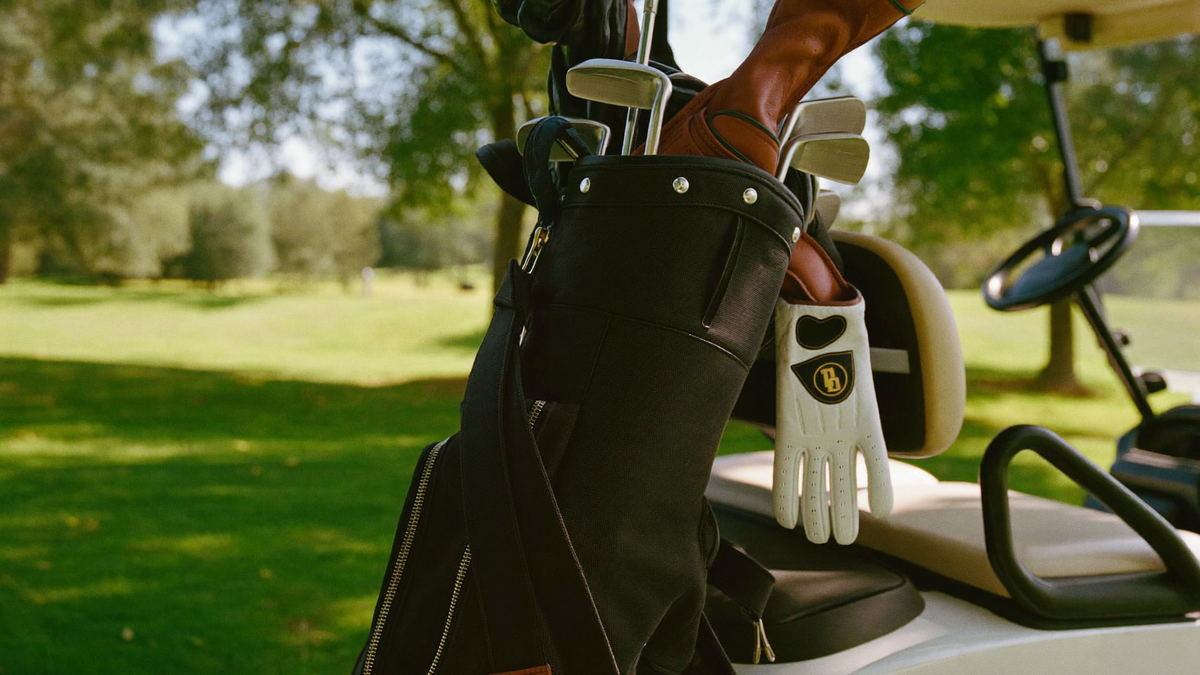
By the back nine, most golfers are carrying a damp, curled-up glove with nowhere good to put it. Get the storage wrong for four hours and you're not just uncomfortable, you're shortening the life of a glove that cost real money.
Ask a group of golfers where to put a wet golf glove during a round and you'll get a shrug, a pocket, or a ziplock bag pulled from a snack cooler. None of these were designed for the job, and a long-running GolfWRX thread on glove storage shows golfers openly admitting their habits are improvised at best. Here's what actually happens to a glove in each of the common spots, and what a purpose-built alternative changes.
Where to Put a Wet Golf Glove During a Round: The Short Answer
If you only read one section, read this one. The methods golfers reach for most are not the methods that dry a glove fastest or protect it longest.
- Front pants pocket: body heat speeds drying slightly, but folding the glove in half for 2-3 holes creases the leather and traps sweat against your skin.
- Ziplock bag: a sealed bag has zero airflow, so a glove sealed inside after the 9th hole can still be wet at the 18th, sometimes wetter, because moisture has nowhere to go.
- Looped around the bag handle (velcro or strap): gets some air movement but leaves the glove bunched and distorted, drying into a curled shape rather than its natural hand form.
- Bag's accessory pocket, loose: better than a sealed bag, but a crumpled glove at the bottom of a hot pocket still dries unevenly, stiff at the seams and damp at the palm.
- A dedicated, ventilated clip or tray: holds the glove open and off the bag in moving air, which is the single biggest factor in how fast leather actually dries.

1. The Bag Pocket Stuff-and-Forget
This is the default for most golfers simply because the pocket is right there. The glove comes off after a wet hole, gets balled up, and goes in with the tees and ball markers.
Effectiveness
Low. A folded, damp glove pressed against other gear has almost no exposure to moving air. Leather dries from the outside in when it's exposed, but a crumpled glove in a closed pocket is mostly drying against itself.
Durability
This is where the real cost shows up. Leather that dries while folded and creased tends to crack along those fold lines first, often well before the rest of the glove wears out. Repeated creasing over a season is one of the more common reasons a glove's palm splits early.
Practicality
Extremely convenient. Zero extra steps, zero extra gear, which is exactly why it remains the most common habit despite being the least effective.
Price
Free, but the hidden cost is a shorter glove lifespan, meaning more frequent replacement.
2. The Ziplock Bag Trick
Some golfers specifically carry a small ziplock bag to keep a wet glove from touching the rest of their gear. It feels like a tidy, hygienic solution.
Effectiveness
This is the method the GolfWRX thread called out directly, and for good reason. A sealed bag traps whatever moisture is already in the glove with nowhere to evaporate to. Instead of drying, the glove can sit in its own humidity for the rest of the round, sometimes coming out of the bag at the 18th hole wetter than it went in at the 9th.
Durability
Prolonged dampness against leather is linked to mildew and material breakdown over time; the EPA's guidance on mould and moisture notes that trapped humidity against organic materials accelerates microbial growth, which is exactly the environment a sealed, damp glove creates.
Practicality
Requires remembering to pack a bag, and it keeps the glove contained, which some golfers prefer for cleanliness even if it doesn't help drying.
Price
Essentially free if you already have bags on hand.
3. The Velcro-Handle Loop
Looping a wet glove around the bag's carry handle or strap, sometimes secured with its own velcro closure, is another habit golfers described: looping it around the bag handle when it gets really sweaty.
Effectiveness
Moderate. The glove is at least exposed to open air rather than sealed or buried, so some drying does happen as you walk or ride between holes.
Durability
The glove dries bunched around a handle, not in its natural open-hand shape. Over repeated rounds this can set a curl or twist into the leather, and the fingers often dry stiffer than the palm because they're folded tightest against the strap.
Practicality
Easy to do mid-round with no extra gear, though the glove can swing, catch on the cart, or fall off if the velcro doesn't grip well.
Price
Free, using the bag's existing handle or strap.
4. A Dedicated, Ventilated Glove Clip
The alternative to all of the above is storage built specifically to hold a glove open, off the bag, in moving air, attached where it's actually reachable between shots.
Effectiveness
This is the one variable every method above struggles with: keeping the glove's natural 3D hand shape while air reaches all sides of the leather at once. An open lattice design, like the one used in GloveTray™ Golf, holds the glove in that shape rather than folded or bunched, which is the condition leather needs to dry evenly rather than just in patches.
Durability
Drying in a consistent open shape, hole after hole, avoids the repeated fold-and-crease cycle that damages leather fastest. Over a season, fewer forced creases generally means a glove holding its form for longer before it stiffens or splits.
Practicality
This is where a bag clip matters as much as the tray itself. A glove holder only helps if it's actually mounted somewhere you'll use it round after round, rather than left in the car trunk. A bag-mounted clip keeps the storage point on the bag itself, next to the pocket you'd otherwise be stuffing the glove into.
Price
A one-time cost for a reusable accessory, versus an ongoing cost of replacing gloves that crack early from folded, uneven drying.

Golf Glove Holder Comparison: What the Numbers Look Like
| Storage method | Airflow around leather | Shape held during drying | Typical cost |
|---|---|---|---|
| Front pocket, folded | Minimal, glove pressed against body | Folded, creased | Free |
| Sealed ziplock bag | None, moisture trapped | Folded inside bag | Free |
| Looped around bag handle | Partial, open air but bunched | Curled, twisted | Free |
| Loose in bag's accessory pocket | Low, crumpled against gear | Crumpled | Free |
| Ventilated clip-mounted tray | High, open lattice around all sides | Natural open-hand shape | One-time purchase |
Stop choosing between a soggy pocket and a sealed bag
If every spot on the bag seems to make the problem worse instead of better, the issue isn't you, it's the storage. See how a ventilated tray and bag clip keep a glove open and drying between holes.
Shop GloveTray Golf Glove StorageBest Golf Glove for Sweaty Hands: Does Storage Even Matter?
Searching for the best golf glove for sweaty hands often misses half the problem. Even a glove designed for grip and moisture handling still needs somewhere to dry properly between holes, or it starts the back nine already damp from the front nine. Excess hand sweat during physical activity is a recognised condition, and the Mayo Clinic's overview of hyperhidrosis notes that sweat glands can be triggered by heat, exertion and nerves, all of which apply on a golf course in summer. No amount of glove technology fully offsets that if the glove then sits wet in a sealed pocket for three hours.
Glove Tray doesn't make a golf glove itself, so this isn't a claim about any specific glove's sweat resistance. What the range does address is the other half of the equation: giving a glove, whatever brand it is, a spot to actually dry between shots instead of marinating in its own moisture.
Golf Glove Holder Checklist: What to Look For
If you're considering a dedicated golf glove holder rather than relying on a pocket or handle loop, a few things matter more than looks.
Effectiveness
Look for open, ventilated construction rather than a solid pouch or clip that still traps the glove flat against a surface.
Durability
Check whether it holds the glove in an open hand shape rather than folded, since shape during drying is what protects the leather long-term.
Practicality
Confirm it actually mounts to the bag, not just sits loose in a pocket, so you'll use it every round rather than leaving it behind.
Price
Weigh the one-time cost against how often you currently replace gloves that crack or stiffen early.
Conclusion
None of the improvised spots golfers already use, the pocket, the ziplock bag, the handle loop, are actually built to dry a glove. At best they're neutral; at worst, like a sealed bag, they make the problem measurably worse by cutting off airflow entirely. The one factor that consistently helps is keeping the glove open and exposed to moving air in its natural shape, which is what a ventilated glove tray is built to do, mounted within reach via a bag clip rather than buried in a pocket. If you're tired of pulling out a stiff, damp glove every few holes, that's the gap worth closing first.
FAQs
Where should I put my golf glove between holes?
The best spot is somewhere open to air rather than folded in a pocket or sealed in a bag. A glove clipped or mounted externally on the bag, held in its natural open shape, dries faster and more evenly than one crumpled against other gear.
Does putting a wet golf glove in a ziplock bag help it dry?
No. A sealed bag has no airflow, so moisture already in the glove has nowhere to evaporate to. Golfers who've tried this often find the glove is just as wet, or wetter, by the end of the round.
Is it bad to leave a golf glove in a hot car or bag pocket?
Repeated heat combined with trapped moisture can speed up leather breaking down and creates conditions where mildew is more likely, since damp, warm, low-airflow environments favour microbial growth on organic materials like leather.
What's the best golf glove for sweaty hands if storage alone doesn't fix sweating?
Glove Tray doesn't sell golf gloves, so we can't recommend a specific brand for sweat resistance. What does help regardless of glove choice is giving the glove proper ventilated storage between holes, so it isn't drying in a folded, trapped state every time you put it back on.

Leave a comment
This site is protected by hCaptcha and the hCaptcha Privacy Policy and Terms of Service apply.